Ceremonial vs culinary matcha: which grade fits you
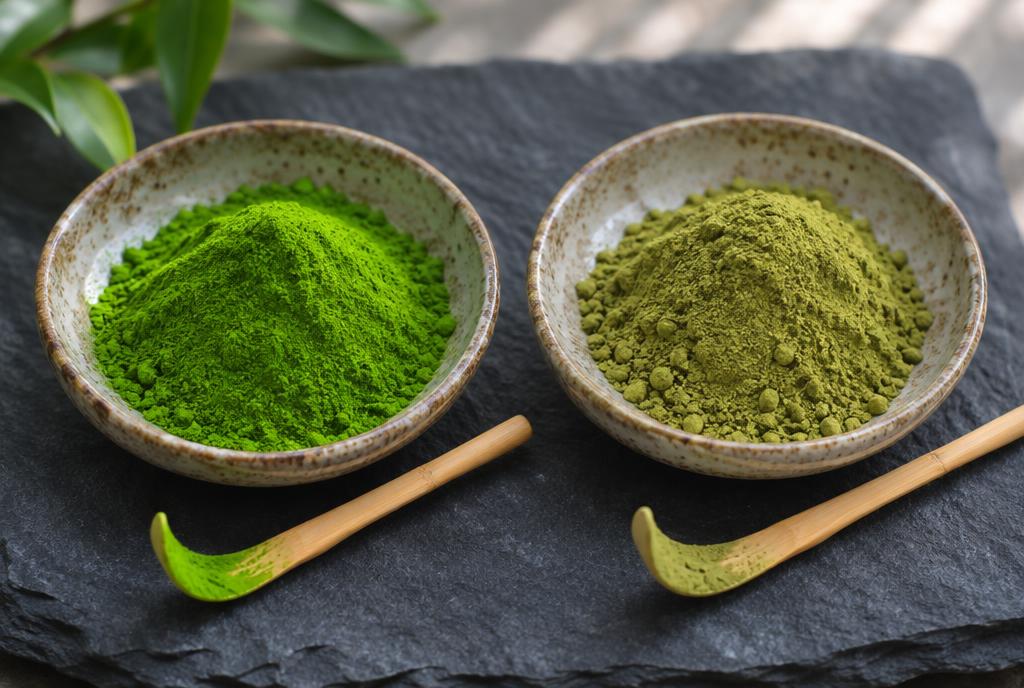
The real difference in ceremonial vs culinary matcha is purpose: ceremonial matcha is made to be drunk with water alone, from young, shaded, first-harvest leaves that are stone-ground into a vivid, sweet, umami-rich powder, while culinary matcha uses later or more mature leaves for a bolder, more astringent taste that holds up in baking and milk. "Latte grade" sits in between, and none of the three is an official Japanese classification.
So the label alone tells you less than you might think. This guide explains what actually changes from one grade to the next, which one fits the way you drink matcha, and when ceremonial grade matcha is worth it.

Shop this guide
RIN 凛 · Uji, Kyoto
Our top pick for drinking with water: first-harvest, stone-milled matcha from Uji, sweet and rounded, with very little bitterness.
Free shipping on Singapore orders with code FREESHIP.
First, these grades are not official
Japan has no government-regulated grading system for matcha. As the Kyoto tea shop Ikkyu explains in its guide to ceremonial vs culinary matcha, "ceremonial grade" is not an official or regulated classification in Japan. Producers and tea experts judge quality instead by colour, aroma, freshness, the texture of the powder and the balance of umami, sweetness and astringency.
Words like ceremonial, premium, latte, café and culinary are largely terms used by sellers outside Japan to help shoppers choose. They are useful shorthand. But two brands can put "ceremonial" on very different teas, and a well-made culinary matcha from one producer can taste better than a careless ceremonial one from another. That is why it pays to look past the label to how the tea was grown and made.
What actually differs between grades
Five things shape a matcha's quality, and they tend to move together. Higher grades get more care at every step.
Harvest
The first flush of spring, called ichibancha, produces the most tender leaves. Matcha sold for drinking usually comes from this harvest and from the youngest leaves at the top of the plant. Culinary matcha more often draws on second or later harvests, or on more mature leaves, which give a stronger, more bitter edge.
Shading
Matcha starts as tencha: tea plants covered for several weeks before picking. Blocking sunlight encourages the leaves to build up amino acids, including L-theanine, which give matcha its savoury umami and deep green colour. Longer, more careful shading is one mark of a higher grade. After picking, the leaves are steamed, dried without rolling, and the stems are removed.
Grinding
Traditional stone mills turn slowly, so the powder comes out very fine and the friction heat stays gentle. Uji producer Yamamotoyama notes that each stone mill grinds only about 40 to 50 grams an hour. That slowness is part of why stone-ground matcha costs more. Many culinary powders are machine-milled instead, which is faster and consistent, but often slightly coarser.
Colour
Good drinking matcha is a vivid, bright jade or emerald green. Culinary matcha leans towards olive or yellow-green, because the leaves were older or less shaded. A dull, brownish colour in any grade usually signals old or poorly stored tea.
Taste
Ceremonial matcha should taste sweet, rounded and deeply savoury, with only a gentle, pleasant bitterness. Culinary matcha is grassier and more astringent. That sounds like a flaw, but it is useful: a bolder tea still tastes like matcha after it meets butter, flour, sugar and milk.
Where latte grade matcha fits
Latte grade matcha, sometimes called premium or café grade, is the middle ground. It is usually smoother than culinary powder but not as delicate as matcha made for drinking with water. The idea is simple: milk softens bitterness and mutes subtle aromas, so a latte does not need the most refined tea to taste good.
That said, many people find a ceremonial matcha makes a noticeably cleaner, sweeter latte, especially with oat milk and no added sugar. If lattes are your daily drink, try both and decide by taste. Our guide to an everyday matcha latte uses 2 g of matcha, 30 ml hot water and 150 ml steamed or oat milk.
Ceremonial, latte and culinary compared
| Ceremonial | Latte (premium) | Culinary | |
|---|---|---|---|
| Typical harvest | First flush, youngest leaves | First or second flush | Later harvests, more mature leaves |
| Shading | Longest, most careful | Moderate | Shorter or variable |
| Grinding | Usually stone-ground | Stone or machine | Usually machine-milled |
| Colour | Vivid jade green | Bright to mid green | Olive to yellow-green |
| Taste | Sweet, umami, low bitterness | Balanced, a little bolder | Grassy, astringent, strong |
| Best for | Usucha, koicha, drinking straight | Lattes, iced drinks | Baking, smoothies, desserts |
| From Matcha x World | RIN, our top pick, for daily usucha and drinking straight; KIWAMI for koicha | RIN, our ceremonial matcha from Uji, Kyoto, also makes a smooth latte | We do not sell a culinary grade. For iced and sparkling drinks, try LEMONGRASS Add LEMONGRASS to cart |
Is ceremonial matcha worth it?
It depends entirely on how you drink it. If you whisk matcha with water, ceremonial grade matcha is worth it, because there is nothing to hide behind. Every difference in harvest, shading and grinding shows up in the cup, and a harsh culinary powder whisked with water is not a pleasant drink.
If you bake, the answer usually flips. In a batch of matcha chocolate chip cookies, sugar, butter and oven heat flatten the subtle sweetness you pay for in a ceremonial tea. A bolder culinary matcha keeps its colour and flavour better there, and it costs less to use by the spoonful.
Lattes are the grey area. Many people are happy with latte grade; others prefer ceremonial because they drink their latte unsweetened. The rising cost of first-flush tencha, which we cover in why matcha is so expensive, makes it worth matching the grade to the use.
How to choose: a simple guide
- You drink matcha with water, hot or cold: choose ceremonial. Start with RIN for daily bowls.
- You want thick, ceremonial-style tea: choose the smoothest, lowest-astringency tea you can. Koicha, thick matcha, uses much more powder and less water, so only very low-astringency tea works. This is what KIWAMI is made for.
- You mostly drink lattes: latte grade works; ceremonial gives a cleaner, sweeter cup.
- You bake or blend smoothies: culinary grade is the sensible, honest choice.
Reading a label beyond the word "ceremonial"
Since the grade name is not regulated, look for details that are harder to fake. A good label or product page should tell you:
- The region, such as Uji in Kyoto, Yame in Fukuoka or Kagoshima.
- The harvest, ideally first flush for drinking matcha.
- How it was ground, stone-ground or machine-milled.
- Independent testing, because matcha is the whole leaf. Every batch is independently verified by SGS.
Then use your senses. Our guide on how to tell good quality matcha walks through colour, smell and texture, so you can judge any tin yourself.
Frequently asked questions
Is ceremonial grade matcha an official Japanese grade?
No. Japan has no regulated grading system for matcha. "Ceremonial", "latte" and "culinary" are informal terms, mostly used by sellers outside Japan, so check the region, harvest and grinding method instead.
Can I use ceremonial matcha for baking?
You can, and it will taste fine, but much of its delicacy is lost under sugar, butter and heat. Many bakers keep ceremonial matcha for drinking and use culinary matcha in recipes.
Can I drink culinary matcha with water?
You can, but most people find it bitter and grassy on its own. It is better in milk drinks, smoothies or food.
Why is ceremonial matcha a brighter green?
Longer shading raises chlorophyll in the leaves, and young first-flush leaves are naturally greener. Fine, careful grinding and fresh storage also help the colour stay bright.
Which Matcha x World matcha should I start with?
RIN, our first-harvest ceremonial matcha from Uji, is the one we recommend first: stone-milled, sweet and rounded, with very little bitterness, and it whisks into a fine, silky froth. For koicha, KIWAMI from Yame is a rarer first-harvest tin made for thick tea.
Choose by the cup, not the label
Ceremonial, latte and culinary are a helpful map, not a rulebook. Decide how you will drink your matcha, then look for the region, harvest and grinding that suit it. For a calm daily bowl that is easy to love, RIN is a gentle place to begin. For koicha, there is KIWAMI.

For koicha and special bowls
KIWAMI 極 · Yame, Fukuoka
A rarer first-harvest, stone-ground tin from Yame, for koicha or a straight bowl on a special occasion.
Calm Energy. One World.