Matcha starter kit: what you need, and what to skip
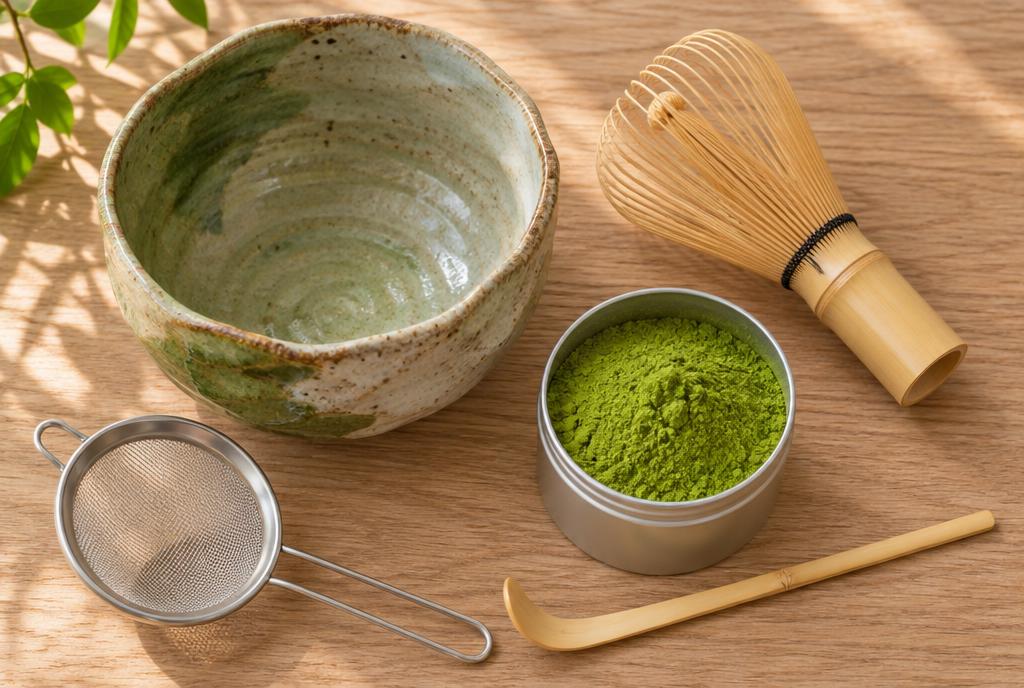
A good matcha starter kit needs only four things: good matcha, a bamboo whisk (chasen), a way to measure (a 1 g spoon or a chashaku) and a bowl wide enough to whisk in. Everything else, from sifters to thermometers to lacquered caddies, is either a nice extra or something you can skip entirely.
If you are wondering what you need to make matcha at home, this guide sorts every common tool into three honest piles: essential, nice to have, and skip. It also shows you how to make your first bowl, and how to look after the kit so it lasts.

Shop this guide
Travel Wellness Kit · RIN from Uji, Kyoto + LEMONGRASS from Kagoshima
Two matchas, a bamboo whisk and a 1 g spoon in resealable pouches: the essentials, and nothing you will not use.
Free shipping on Singapore orders with code FREESHIP.
What do you need to make matcha?
Strip matcha back to its simplest form and you need three things: powdered green tea, water at about 80°C, and something that can whisk the two into a smooth, lightly frothy drink. Matcha does not dissolve the way instant coffee does. It is finely ground leaf that stays suspended in water, so the tools exist mainly to break up clumps and move the powder through the water quickly.
That is why even traditional Kyoto tea houses keep their beginner sets short. Ippodo's own Hajime-no-Ippodo starter set is simply a whisk, a bowl and portioned matcha, with a note that you add hot water yourself. A matcha kit for beginners does not need to be bigger than that.
The four tools, explained
Chasen: the bamboo whisk
The chasen is the one tool that is hard to replace. Its fine, flexible bamboo tines move through the water fast enough to lift the powder and create a soft layer of foam. A metal balloon whisk is too stiff and too sparse to do the same job, and a spoon simply stirs clumps around. If you buy only one tool, make it this one.
Chashaku or 1 g spoon: measuring
The chashaku is the slender bamboo scoop used in the tea ceremony. It is beautiful, but its scoops vary with how you hold it. A 1 g measuring spoon gives you the same dose every morning, which matters more while you are learning what you like. Our ritual uses 2 g for a hot bowl: two level 1 g spoons.
Sifter: the clump breaker
Matcha powder is so fine that it clumps in humid air, and Singapore and Malaysia are rarely dry. A small fine-mesh sifter breaks those clumps before water touches them. It is genuinely useful, but a clean tea strainer from your kitchen drawer does the same job, so it sits in the nice-to-have pile.
Bowl: room to whisk
A chawan is a wide, flat-bottomed tea bowl. The width is the point: it gives the whisk room to move in a quick W motion. Any wide cereal or soup bowl will work while you decide whether you love the ritual. A tall mug will not, because the whisk cannot move freely.

Essential, nice to have, or skip
Here is the whole picture in one table. The last column shows what the Travel Wellness Kit already covers, so you know what you still need, if anything.
| Item | Verdict | Why | From Matcha x World |
|---|---|---|---|
| Good matcha | Essential | The tea decides the taste. Tools cannot fix flat or bitter powder. | RIN and LEMONGRASS, 30 g each, in the Travel Wellness Kit |
| Bamboo whisk (chasen) | Essential | The only tool that makes smooth, frothy matcha quickly. | Included in the kit |
| 1 g spoon or chashaku | Essential | Consistent dosing is how you learn your preferred strength. | 1 g spoon included |
| Wide bowl | Essential | The whisk needs room. Any wide bowl works to start. | Use one you own |
| Fine-mesh sifter | Nice to have | Removes clumps in humid weather; a tea strainer also works. | Use a kitchen strainer |
| Kettle with temperature control | Nice to have | Makes 80°C easy. A kitchen thermometer does the same. | Not included |
| Whisk holder (kusenaoshi) | Nice to have | Helps the tines keep their shape as they dry. | Not included |
| Milk frother | Nice to have, for lattes | Foams milk well; not needed for matcha with water. | Not included |
| Full tea-ceremony set (natsume caddy, fukusa cloth) | Skip | Lovely if you study chado; unnecessary for a daily cup. | Not needed |
| Large bulk tins | Skip | Opened matcha is best within a month, so big tins go stale. | Our 30 g size suits this |
| Sweetened matcha mixes | Skip | Sugar hides the tea, and you cannot control sweetness. | No sugar, no flavourings, no fillers |
What to skip, and why
Most of what fills a large matcha set is there to look complete in a gift box. Three things in particular are worth leaving out of a first kit.
- Oversized tins. Matcha is whole leaf ground to powder, and once opened it slowly loses colour and aroma. A smaller tin you finish within a month tastes better on the last day than a large one does halfway through.
- Premixed or sweetened powders. These are often sold as an easy start, but they teach you the taste of sugar, not of tea. You can always add honey or syrup later, by the half teaspoon.
- Ceremony accessories you will not use. A silk fukusa and a lacquered natsume belong to the formal tea ceremony. If that interests you, it deserves a teacher, not a bundle.
Choosing your first matcha
The tea itself matters more than any tool. For drinking with water alone, choose a matcha made for that purpose: young, shaded, first-harvest leaves, stone-ground to a fine powder. It should be vivid green and smell fresh and sweet, not dusty or hay-like. If the labels confuse you, our guide to ceremonial vs culinary matcha grades explains what each term really means.
A gentle starting point is RIN, our ceremonial matcha from Uji, Kyoto. It is made for slow mornings: smooth, balanced and easy to like on the first try. If you prefer something brighter, or you mostly drink matcha cold, LEMONGRASS, our organic matcha from Kagoshima blends 80% matcha with 20% organic lemongrass. It is Organic JAS, certified by JONA, and lovely hot, iced or with sparkling water.
Before you buy anywhere, it helps to know how to tell good quality matcha by colour, smell and texture.
Your first bowl, step by step
This is a classic usucha, or thin whisked tea. It takes about two minutes.
- Heat water and let it settle to about 80°C. Boiling water brings out bitterness.
- Warm your bowl with a little hot water, then tip it out and dry it.
- Sift 2 g of matcha (two level 1 g spoons) into the bowl.
- Pour in 70 ml of water at about 80°C.
- Whisk briskly in a W motion for 15–20 seconds, keeping the tines just off the bottom of the bowl, until a fine foam forms.
- Lift the whisk gently from the centre and drink straight from the bowl.
Our page on how to prepare matcha has the same ritual with photos. When you are ready for more, try usucha, thin whisked tea in depth, or a matcha latte at home: 2 g of matcha whisked with 30 ml hot water, topped with 150 ml steamed or oat milk.
For iced matcha, whisk 2 g with 30 ml warm water, pour it over ice and add 150 ml cold water. For a sparkling version, LEMONGRASS works best: whisk 2 g, pour over ice and top with sparkling water.
Looking after your kit
A bamboo whisk lasts much longer with a little care.
- Before first use, soak the whisk tines in warm water for about a minute so they soften and do not snap.
- After each use, rinse the whisk, spoon and bowl in warm water. Skip soap: it can leave a taste and dry out the bamboo.
- Dry it in open air, on a whisk holder if you have one, so the tines keep their shape. Never seal a damp whisk in a box or pouch.
- Replace it when several tines have broken or curled. A chasen is a tool that wears out with use, and that is normal.
For the matcha: keep cool and dry. Enjoy within a month of opening. In a warm climate, a sealed tin or resealable pouch away from the stove and sunny windows makes a real difference.
Frequently asked questions
Can I make matcha without a whisk?
Yes, though the texture changes. A small milk frother or a sealed jar shaken hard will mix the powder, especially for lattes and iced drinks. For a smooth, foamy bowl of matcha with water, a bamboo chasen still does the best job.
Do I really need a sifter?
Not strictly. Sifting removes clumps, which matters most in humid weather. A fine kitchen tea strainer works just as well as a dedicated matcha sifter, so try that first.
How long does a bamboo whisk last?
It depends on how often you use it and how you dry it. With daily use and good care, many people find a chasen lasts several months. Replace it when the tines start breaking or lose their curl.
Is a chashaku better than a measuring spoon?
A chashaku is traditional and lovely to use, but its scoop size varies with your hand. A 1 g spoon is more consistent, which helps while you learn your ideal strength.
What is the best matcha starter kit to buy?
Look for a kit built around the essentials: good matcha, a bamboo whisk and a reliable measure. Our Travel Wellness Kit with RIN and LEMONGRASS includes 30 g of each matcha, a bamboo whisk and a 1 g spoon in resealable pouches. Add a wide bowl you already own and you are ready.
Start small, start well
You do not need a cupboard of equipment to make matcha you love. You need good tea, a whisk, a measure and a bowl, and a few quiet minutes each morning. Begin there, and add tools only when you find yourself wanting them.

Already have a whisk?
RIN 凛 · Uji, Kyoto
Our ceremonial matcha for slow mornings, in a 30 g tin for anyone who already owns their tools.
Calm Energy. One World.