Can you drink matcha on an empty stomach?
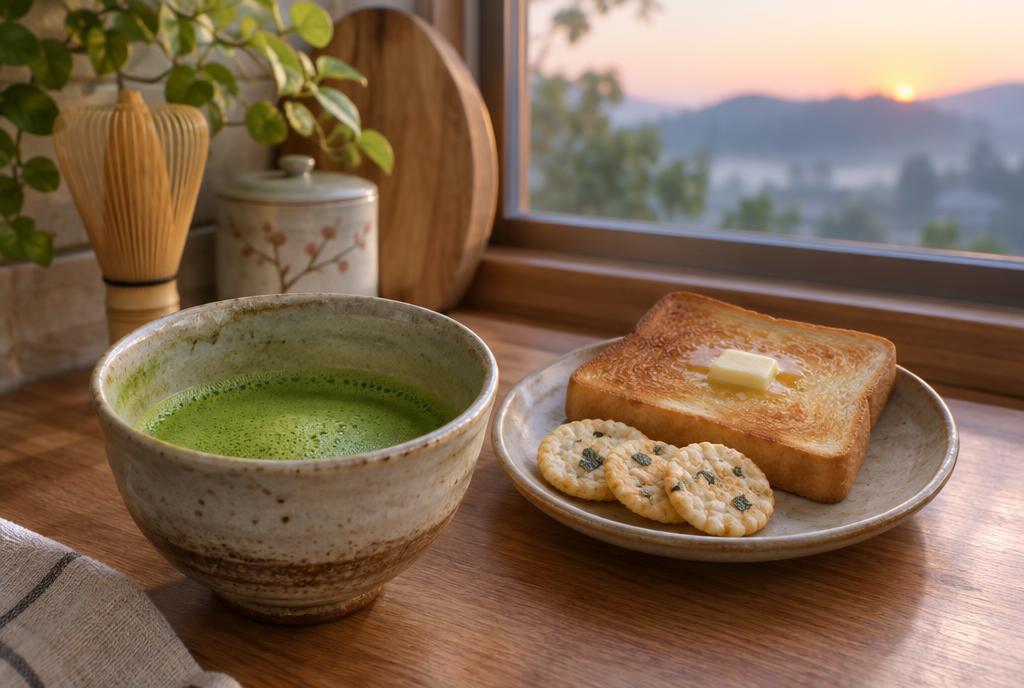
Yes, most people can drink matcha on an empty stomach, and there is no clinical guidance that says you should not. Some people find a strong bowl first thing feels sharp or a little queasy, though, and for them matcha sits better with or after a small bite of food.
So the honest answer is personal rather than rule-based. Below is what is actually known, why a morning bowl can feel different from one after breakfast, and five simple ways to make your first cup gentler if it does not agree with you.

Shop this guide
LEMONGRASS 爽 · Kagoshima
A lighter-tasting first cup: organic matcha with organic lemongrass, lovely iced or with sparkling water when a strong hot bowl feels like too much.
Free shipping on Singapore orders with code FREESHIP.
What the evidence says, and what it does not
Search for this question and you will find two confident camps. One says matcha on an empty stomach is the best way to drink it. The other says it will upset your stomach. Neither usually cites a study, because there is no clinical trial on matcha and empty stomachs either way.
What we do have is evidence on the main things in the bowl:
- Caffeine. The European Food Safety Authority considers single doses up to 200 mg safe for healthy adults, and up to 400 mg a day spread through the day. A 2 g bowl of matcha sits well below that single-dose figure; published analyses put it at roughly 38 to 89 mg, depending on the leaf.
- Catechins. These polyphenols give matcha its gentle bitterness and astringency. EFSA's review of green tea found that infusions prepared the traditional way are generally considered safe; its concerns were about concentrated supplements.
- The stomach itself. Most research on drinks and stomach comfort looks at coffee, not tea. A 2022 review of coffee and the gut found that coffee stimulates stomach acid and the hormone gastrin, yet most data did not support a direct effect on reflux. That was coffee, the review was supported by a coffee industry body, and it tells us little about matcha.
In short: no evidence that an empty-stomach bowl is harmful for healthy adults, and no evidence that it is better. What remains is how it feels to you.
Why a morning bowl can feel different
If matcha suits you after lunch but feels sharp at 7am, a few ordinary things are likely at play.
- Concentration. A traditional bowl is only 70 ml. Two grams of whole tea leaf in that little water is a strong, intense drink, much more concentrated than a mug of steeped green tea.
- Nothing to buffer it. With food in your stomach, a drink is mixed and diluted with the meal. On its own, you taste and feel all of it at once.
- Caffeine sensitivity. Some people simply feel caffeine more strongly first thing. Our guide to matcha vs coffee caffeine sets the numbers side by side.
- Preparation. Water that is too hot pulls more bitterness forward, and a heaped spoon can easily mean 3 or 4 g rather than 2 g.
None of these is a reason to stop drinking matcha. They are clues to what to adjust.
Five ways to make your first cup gentler
1. Measure, then thin it out
Use two level 1 g spoons, not a heaped teaspoon. If the bowl still feels strong, keep the 2 g and add more water, or try a single gram. A thin, lighter usucha, the thin whisked tea, is the traditional everyday style for a reason.
2. Watch the temperature
Use water at about 80°C, not boiling. Pour from the kettle into a jug first, or let it rest for a few minutes. The bowl will taste sweeter and softer.
3. Have a small bite first
A banana, a slice of toast or a handful of nuts is enough for many people. Our morning matcha routine suggests exactly this for anyone new to a bowl on waking.
4. Make it cold, longer or milky
An iced matcha is more dilute: 2 g whisked with 30 ml of warm water, poured over ice and topped with 150 ml of cold water. A latte, with 150 ml of steamed or oat milk, is softer still. Many people find either easier first thing than a small, hot, concentrated bowl.
5. Choose a gentler leaf
If caffeine is the issue, LOW CAFFEINE from Izumo has 7 mg caffeine a cup* against 64 mg in regular matcha. If you would simply like a lighter, brighter taste, LEMONGRASS is 80% matcha and 20% organic lemongrass, so a 2 g serving carries a little less tea leaf, with a fresh citrus note. It is lovely iced, or as a sparkling matcha lemonade later in the day.
Empty stomach and iron: a useful overlap
There is one reason a pre-breakfast bowl can be a good idea. Tea polyphenols reduce how much iron you absorb from plant foods eaten at the same time. A 2017 trial found that leaving an hour between a meal and tea roughly halved that effect.
So if iron is a concern for you, a bowl of matcha well before breakfast, or one to two hours after, keeps the tea away from your meal. Our guide to matcha and iron absorption explains the timing in detail.
Ways to take your first cup, compared
| First cup | How it feels | Best for |
|---|---|---|
| Hot bowl on an empty stomach (2 g, 70 ml) | Strong, intense, quick | People who enjoy it and feel fine |
| Hot bowl after a small bite | Same taste, softer on many stomachs | Anyone who finds the first bowl sharp |
| Iced (2 g, 30 ml warm water, ice, 150 ml cold water) | Dilute, refreshing, easy | Warm Singapore mornings |
| Latte (2 g, 30 ml hot water, 150 ml milk) | Round, creamy, mild | Sensitive stomachs, coffee switchers |
| Lower caffeine cup | Gentle, naturally sweet | Caffeine-sensitive drinkers |
| From Matcha x World | For a bright, lighter iced first cup: LEMONGRASS from Kagoshima · Add LEMONGRASS to cart | |
When to check with your doctor
Matcha is a food, not a medicine, and this guide is not medical advice. Speak to your doctor before making an empty-stomach bowl part of your routine if you:
- have reflux, gastritis or another stomach condition
- are pregnant or breastfeeding, where EFSA's caffeine guidance is 200 mg a day from all sources
- take medicines that interact with caffeine, or have been told to limit it
- notice persistent discomfort, nausea or palpitations after drinking it
For everyone else, a simple test works: try the same bowl before and after breakfast on different days, and notice which feels better.
Frequently asked questions
Is matcha better on an empty stomach?
There is no evidence that it is. Some people like the clean taste of a bowl first thing; others prefer it after food. Both are fine.
Why does matcha make me feel queasy in the morning?
Usually a strong, concentrated bowl with nothing else in your stomach. Try a level 2 g, more water, water at about 80°C, or a small bite first. If it persists, speak to your doctor.
Is matcha gentler on the stomach than coffee?
No study has compared the two head to head. Many people find matcha feels gentler, and a bowl usually holds less caffeine than a mug of brewed coffee, but that is a personal impression rather than a proven difference.
Should I drink water before matcha?
It is a pleasant habit after a night's sleep, and it costs nothing. There is no evidence it changes how matcha affects your stomach.
Which Matcha x World matcha is best for a gentle first cup?
For a light, refreshing first cup, try LEMONGRASS, our organic matcha from Kagoshima, iced or with sparkling water. Organic JAS, certified by JONA. No sugar, no flavourings, no fillers. If caffeine is what you feel, choose LOW CAFFEINE instead.
Start the morning your way
There is no single right time for matcha. Measure it, cool the water, and listen to how the first cup feels. If caffeine is what unsettles you, start with a softer leaf.

For caffeine-sensitive mornings
LOW CAFFEINE 静 · Izumo, Shimane
First-harvest matcha with 7 mg caffeine a cup* against 64 mg in regular matcha: smooth, gentle and naturally sweet.
Calm Energy. One World.
*Per 2 g serving, lab tested. Regular matcha: Standard Tables of Food Composition in Japan.